Education News
20 Ekiti Schools Get Free Internet Routers, One Year of Data

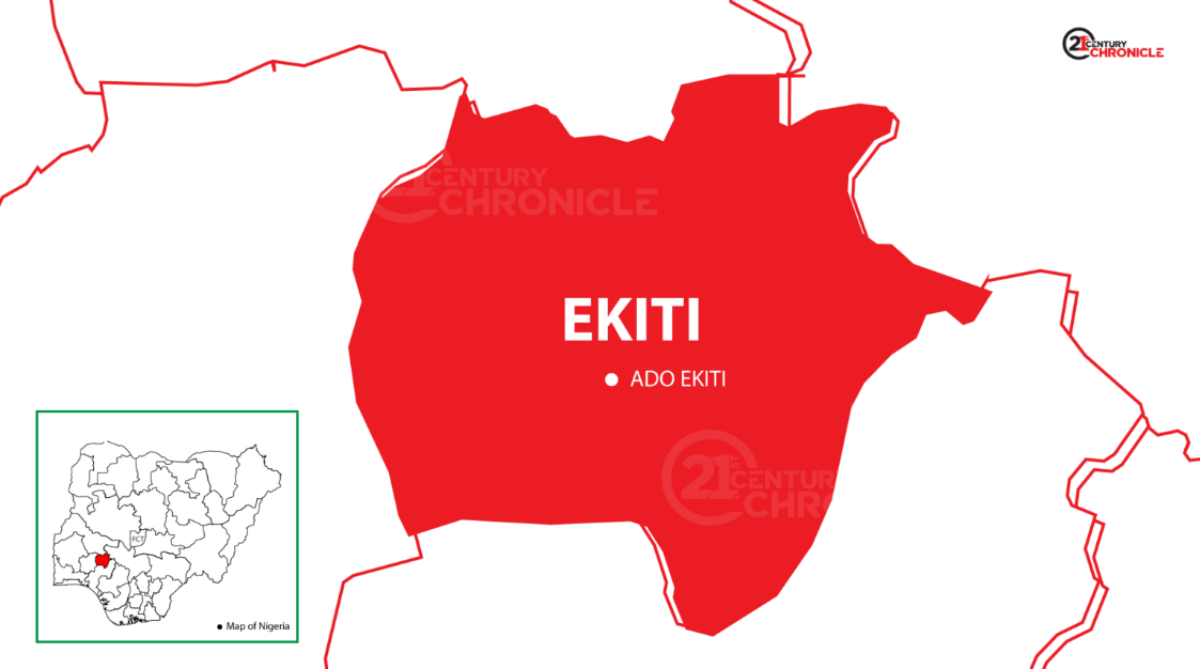
In a bid to enhance access to digital learning resources, 20 public secondary schools in Ekiti State have been provided with free internet routers and one year data subscription.
The project unites Focused Team Foundation, the United Nations Children’s Fund (UNICEF) and telecom giant MTN for the provision of internet connectivity services to public schools.
The programme will provide each beneficiary school with a router and monthly data allowance. The schools will receive 30GB of data initially, and 32GB of data in subsequent months throughout the 1 year subscription.
The support is expected to support students and teachers to access online learning resources, research, and to utilise digital tools in the classroom more.
Ekiti Government cries out for responsible use of Internet facilities
The Commissioner for Education, Ado Ekiti State, Dr Olabimpe Aderiye, welcomed the project during the presentation ceremony in Ado Ekiti.
Access to the internet had become a growing necessity in the teaching and learning process, Aderiye said, saying that learners and teachers required it to facilitate classroom teaching and learning activities.
She praised the organisations for their contribution to the effort of enhancing the quality of education in the State.
The commissioner also urged school officials to assure that the equipment was well-maintained and used for educational purposes.
The program would assist the government with its broader goal of enhancing the quality of instruction and learning in public schools, she said.
MTN plans to expand the Programme
MTN Senior Lead in the Sales and Trade Department, Isaiah Akinbaani stated that the programme was aimed at increasing Internet connectivity in Nigerian schools and to create more opportunities for digital learning.
He emphasized that connections might enable students to find educational information outside their classrooms.
The 20 schools were referred to as beneficiaries of the pilot phase of the initiative by Akinbaani. He also said the programme would be seen in more schools in Ekiti State.
If the following phases are implemented, the planned expansion will provide access to Internet-based educational resources to further students and teachers.
The schools are among the beneficiaries.
Some of the schools cited in the report are Ado Community High School, Ado Ekiti; All Souls Anglican High School, Ado Ekiti; CAC High School, Ado Ekiti; Corpus Christi College, Ilawe Ekiti; Government College, Ado Ekiti; and Ekiti State Government College, Ikere Ekiti.
The aim of the initiative is to ensure increased access to the Internet in public secondary schools where access to digital learning facilities may be restricted.
The critical nature of Internet access for students.The importance of Internet access for students.
Access to the internet can enable students to conduct research on the topics covered in the school curriculum and to access further learning resources and to build their digital literacy. It also helps teachers to integrate online resources into their curricula.
However, long-term success of the project relies on the continued provision of network coverage, on ensuring that data allowance is used wisely and on the protection of the routers.
The proposed expansion of the programme to other schools in Ekiti State could benefit additional schools in the state as well.
For the time being, the provision of routers and one year of data pave the way for the 20 router-assisted schools to deepen digital learning and broaden students’ access to educational information.

Medical lecturers have warned the Federal Government that admitting more students into Colleges of Medicine, without first building the halls, laboratories and workforce to carry them, will weaken the quality of doctors Nigeria produces.
The warning came from the University College Hospital, Ibadan chapter of the Medical and Dental Consultants Association of Nigeria. The chapter’s Chairman, Dr Oluseyi Akande, spoke in Ibadan during the association’s biennial press briefing, held as part of its 2026 Annual General Meeting.
Akande said the government’s plan to raise admission quotas — including at the College of Medicine, University of Ibadan — was well intended. Nigeria does not have enough doctors, and training more of them is a reasonable answer to that shortage. His concern is the order in which it is being done.
‘You can’t teach 350 students in a hall built for far fewer’
According to him, medical training is not a lecture that can simply be repeated to a larger crowd.
“The implication is that the training is not going to be standard. If you have 350 students and you don’t have a hall that can take 350 students, what do you do?” he asked.
He described medicine as an apprenticeship, one that depends on steady, close contact between students and the consultants training them. When the numbers rise faster than the space, the beds and the teachers, that contact thins out — and so does the learning.
Akande said the Federal Government had stepped in to provide infrastructure for the expanded intake, but that the work has been slow. The College of Medicine, University of Ibadan, has been taking in more students since last year, while some of the promised buildings remain unfinished.
Fewer teachers, more work
The association also called for a fresh round of recruitment of medical lecturers. Consultants, Akande said, are now juggling clinical duties with the teaching of both undergraduate medical students and resident doctors, at a time when many colleagues have left the country for jobs abroad.
That migration has left some departments at UCH without resident doctors at all, pushing consultants into duties they would normally supervise rather than perform.
Equipment funds still unreleased
Beyond staffing, MDCAN asked the government to release money already approved in the 2025 budget for life-saving equipment at UCH.
“I would also like to draw attention to the fact that the Federal Government of Nigeria is yet to release funds to the University College Hospital for the procurement of many life-saving equipment budgeted for in 2025,” Akande said.
He urged that the money be released without further delay, noting that the hospital needs the equipment for clinical work, training and research alike.
The association further asked the government to constitute the Boards of Management of Federal Tertiary Hospitals, saying the hospitals cannot run smoothly or deliver their mandates without them.
Appeal against attacks on health workers
MDCAN used the briefing to appeal to Nigerians to stop attacking doctors, nurses and other health workers, calling such violence a growing problem across the country.
Akande said health workers understand how serious their responsibilities are, but that some things lie outside their control — old or broken equipment, and an unreliable power supply among them. He asked patients and relatives who are unhappy with their treatment to seek redress through proper channels instead of raising their hands.
The wider quota problem
The warning lands in a system already strained by quota disputes. The Medical and Dental Council of Nigeria sets carrying capacities based on what each school can realistically handle — teaching hospitals, lecturers, laboratories, beds and supervision.
Where universities have admitted beyond those limits, the cost has fallen on students years later. At the University of Ilorin, for instance, graduates were left waiting for induction after the school presented fewer candidates to the MDCN than had qualified.
MDCAN’s message in Ibadan is essentially a request to avoid repeating that pattern on a national scale: build the capacity first, then fill it.
Activities for the 2026 Annual General Meeting included a scientific conference, sporting events, courtesy visits, a luncheon and a thanksgiving service.
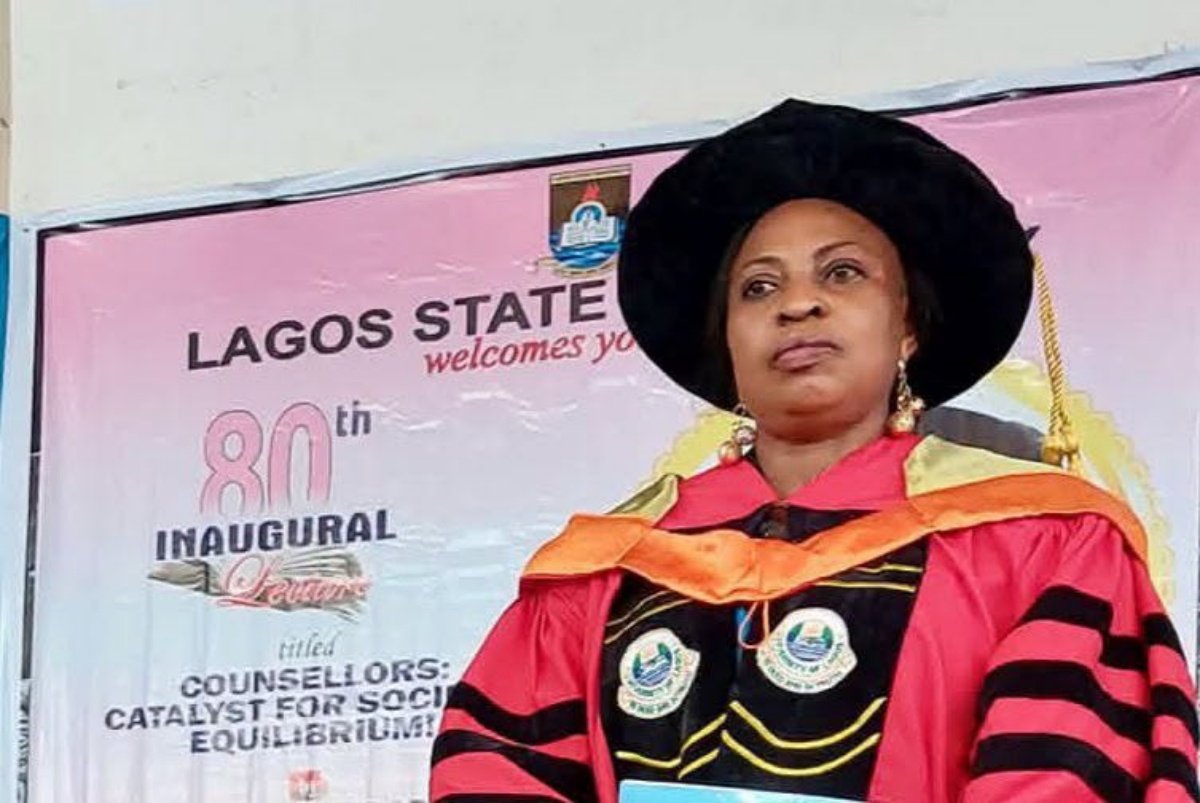
The outgoing Vice-Chancellor of Lagos State University (LASU), Prof Ibiyemi Olatunji-Bello, has advised the incoming Vice-Chancellor, Prof Ayodeji Badejo, to take her time before making big decisions.
Olatunji-Bello gave the charge on Sunday evening in Lagos at an event held in her honour by the Centre for General Nigerian Studies, LASU. The event, themed “More Prayer, More Commitment and Finishing Strong”, was organised to mark the end of her five-year tenure, which ran from 2021 to 2026.
She said the office of a Vice-Chancellor is not a place for quick or emotional decisions. Every choice, she explained, should be weighed carefully because it will affect the university, the staff and the students.
“She will have what we call, in the Bible, long-suffering. It is called patience,” Olatunji-Bello said.
Patience, courage and commitment
Olatunji-Bello urged her successor to lead with wisdom, patience and commitment, and to be courageous when tough calls have to be made. She noted that a Vice-Chancellor will often face pressure from many sides, and that the best answer is usually the one that serves the institution rather than the loudest voice in the room.
Prof Badejo, a Professor of Guidance and Counselling, is expected to assume duty on September 20. Her appointment was approved by Lagos State Governor, Mr Babajide Sanwo-Olu, and announced by the Commissioner for Information and Strategy, Gbenga Omotoso.
Badejo will become the third female Vice-Chancellor in LASU’s history, after Prof Jadesola Akande and Olatunji-Bello herself.
A look back at five years
Olatunji-Bello, a Professor of Physiology, resumed as LASU’s ninth substantive Vice-Chancellor in September 2021. Her single, non-renewable five-year term ends on September 19, 2026.
At her final convocation address in August, she said her administration recorded a 96 per cent first-year accreditation success rate, securing full accreditation for 31 out of 37 programmes presented in her first exercise. In 2023, 43 of 44 programmes presented were fully accredited, and in 2026, 17 new programmes received full accreditation from the National Universities Commission.
She also said the university’s internally generated revenue grew from about N3bn to N13bn during her tenure, describing LASU as the most subscribed university in Nigeria and the most digitally advanced among its peers.
At a valedictory Senate session held on August 27, the university’s Registrar, Emmanuel Fanu, said Olatunji-Bello presided over 55 statutory Senate meetings. The administration also promoted 127 academic staff to the rank of professor and positioned LASU as a TETFund Centre of Excellence.
Facilities and welfare
Olatunji-Bello said examination challenges during her time pushed the university to develop alternative arrangements and to conceive its 2,000-seat Computer Test Centre. She added that a 3,000-seat auditorium for LASU has been captured in the Tertiary Education Trust Fund budget.
She called on the university community to maintain the buildings and facilities already put in place. Her administration, she said, built toilets across the campuses to improve student welfare, especially for female students, and provided recreational facilities for staff.
Speaking earlier at the event, a former Deputy Vice-Chancellor (Administration), Prof Adenike Boyo, said Olatunji-Bello’s tenure showed the value of prayer, commitment and perseverance.
Badejo takes over a university that has risen in national ranking and is widely rated among the best state-owned institutions in Nigeria. Expectations are high that she will keep the momentum on academics, infrastructure and campus stability.


LASU Extends 2026/2027 Direct Entry Screening Deadline to October 11

20 Ekiti Schools Get Free Internet Routers, One Year of Data

Medical Lecturers Warn FG Against More Students Without More Facilities
Medical Lecturers Warn FG Against More Students Without More Facilities

Don’t Rush Decisions — Olatunji-Bello Tells Incoming LASU VC, Prof Badejo